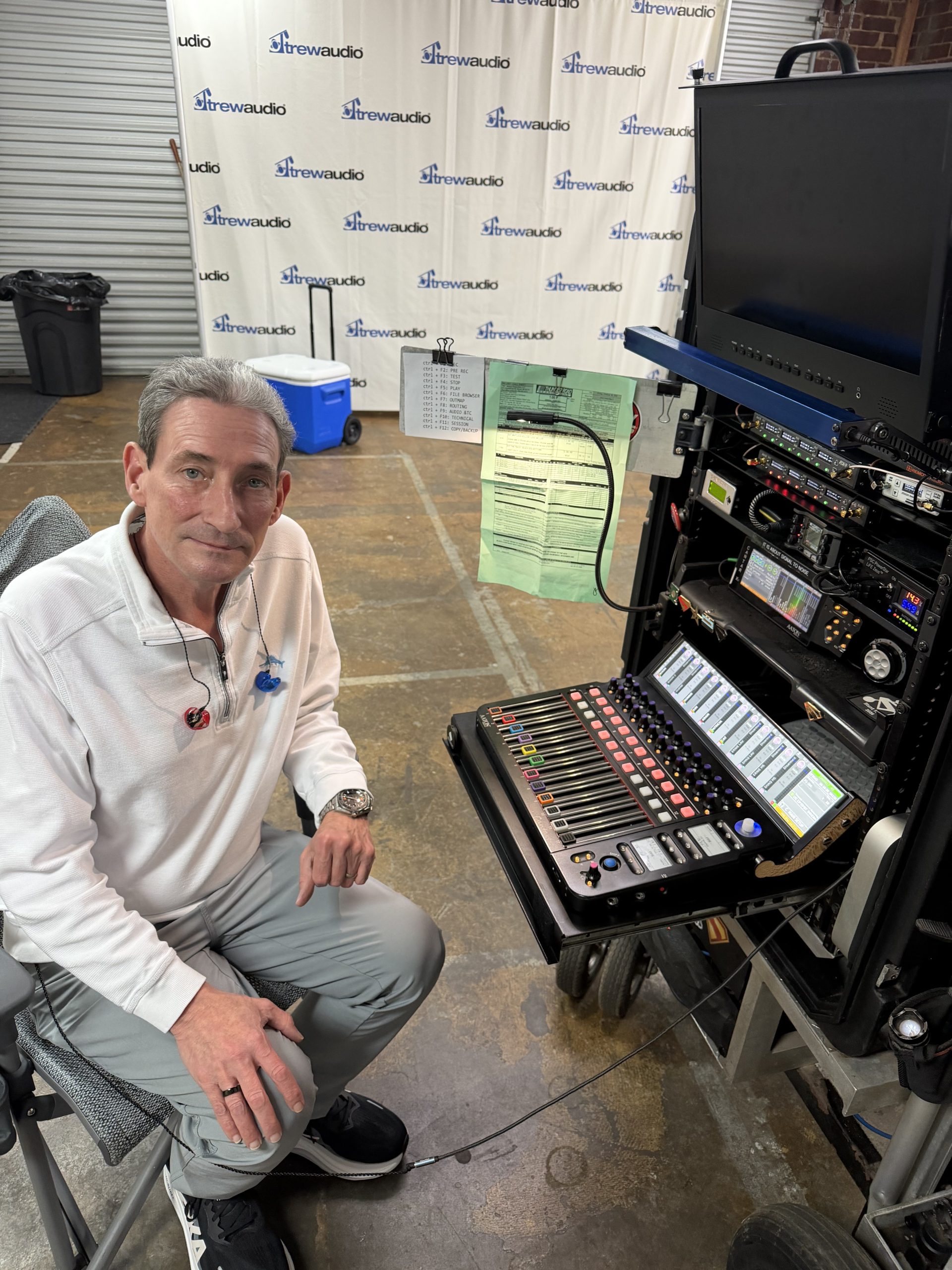
Whit Norris has been recording dialogue for nearly forty years, but there’s only so much experience can do when you’re trying to get a radio signal through the walls of a federal prison.
Norris was mixing James Gunn’s Man of Tomorrow, the sequel to Superman, when the crew spent several days filming inside one. Steel bars and heavy walls made wireless reception difficult, and there were limits on where the crew could put the sound equipment.
Norris had brought a Wisycom RF-over-fiber system. His crew could put the receiving antennas near the performers and carry the signal back over optical fiber while the cart stayed put. Norris carries two 250-foot runs that can be joined, though one is usually enough.
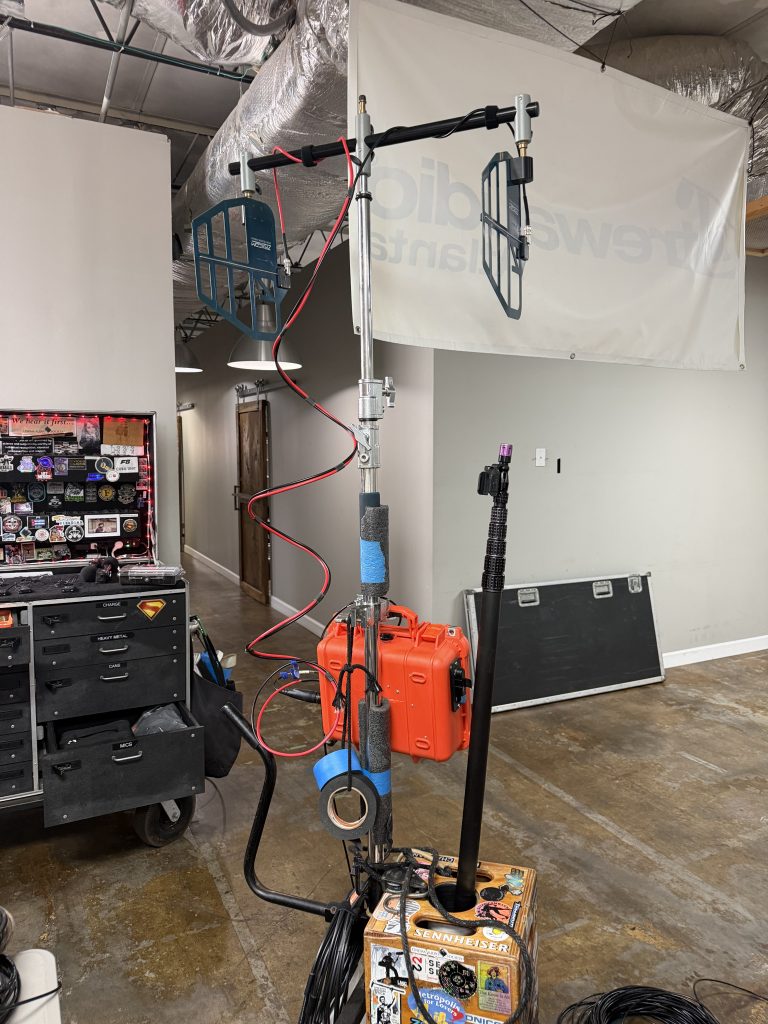
“That gave us a lot of leeway there, the few days that we shot there,” Norris recalled.
With multiple cameras, Technocranes, and other equipment competing for space, Norris says sound crews are often pushed farther from the action. Separating the antennas from his cart lets him stay somewhere he prefers to work: within earshot of the director.
Norris had handled a few days of additional photography on Superman, which longtime Gunn collaborator Lee Orloff mixed. On Man of Tomorrow, Norris could keep his cart near the director’s village, close enough to answer a question from Gunn while the antennas stayed close to the performers.
“James is a director that I really liked,” he said. “You don’t exactly phone it in. You have to be paying attention all the time. Things change.”
Keeping Superman Quiet
One costume material on Man of Tomorrow worried Norris. When he went through the scenes, he realized the sound he was most concerned about was the dialogue of the actors standing near the person wearing it. If the material made enough noise, their microphones could pick it up, too. He raised it with the costume department, and they changed the material.
That’s why Norris tries to see finished costumes before shooting. Photos and drawings help, but sometimes the sound crew gets its first look on the day. When a costume allows for it, they’ll sew a microphone directly into it. Sound utility Matthew Thompson, who has worked with Norris on roughly ten productions, handles much of that wiring.

Norris encourages production mixers to spend time with dialogue editors. He’s heard what restoration tools can recover and what aggressive processing can do to a recording. That experience helps him decide when to ask for a wild track, a separate recording of the dialogue apart from the filmed take.
Stopping a large production for another recording costs shooting time, so Norris saves those requests for dialogue he thinks will be difficult to repair later. When editorial facilities are nearby, he’s arranged to record additional material at the end of the day or during a break in the schedule.
The Recorder He Won’t Give Up
Norris still records on an Aaton Cantar X3. In fact, he owns three of them, having bought the third as a source of spare parts if he ever needs them. He mixes on the Cantaress surface designed to accompany the recorder.
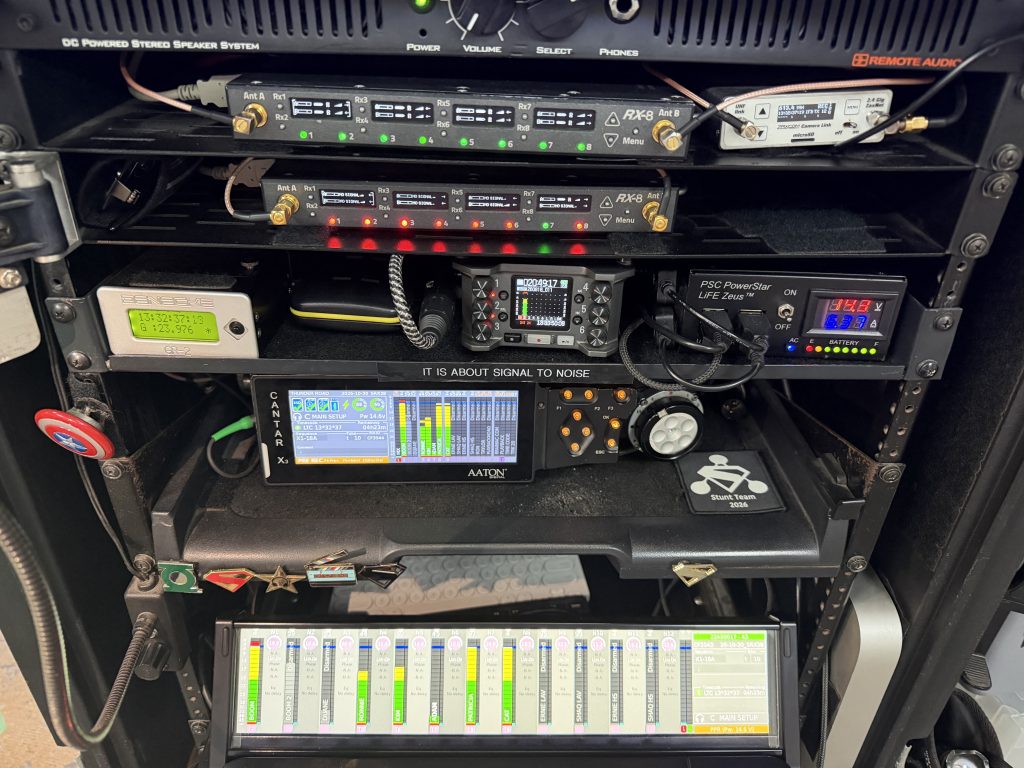
“It’s still an incredible recorder. I love how it sounds and how it works.”
“At this point in my career, I’m not going to run out and buy, invest a lot of money in something unless there’s a reason to,” he said. The exception would be a technology capable of substantially changing his workflow.
Norris pairs the Cantar with Zaxcom wireless. His boom operators use ZMT4 transmitters that supply phantom power to the mics, so they can work without cables down their poles. His regular mics include Schoeps CMITs for exteriors and some larger stages, an MKH 50, and DPA 6060 and 6061 lavaliers. He knows how they sound and what the dialogue editors will get.
That preference extends to the Voice of God system, which lets the director and first assistant director speak to the set. Norris uses older Lectrosonics receivers and powered JBL speakers, with Remote Audio microphones that transmit only while a button is held.
“You’ve got to have a push to talk. On and off doesn’t work.”
Norris has seen what happens when a mic gets dropped or left switched on. With push-to-talk, releasing the button closes the mic. The buttons wear out, so he keeps spares.
When Tape Was Expensive and So Was Everything Else
Norris built Radio Shack electronics kits as a kid and taught himself to solder. He loved radio and music, tried guitar and drums, and found his way to the campus radio station in college. There he learned to cut and splice tape and prepare music, promotional spots, and public service announcements for broadcast. An internship at Air Mobile Productions led to work with one-inch videotape and, eventually, to location sound for commercials and corporate productions.
After a stint restoring film materials for Ringling Brothers and Barnum & Bailey Circus in New York, he moved to Atlanta and began working on low-budget action pictures. A typical rental package included a Nagra, a couple of boom mics, maybe a plant mic or two, and two wireless systems.
When Norris was ready to buy his own equipment, his father helped arrange bank financing. The timecode Nagra alone cost about $10,000 on sale. He bought a small PSC mixer and microphones from Schoeps and Neumann, and kept renting wireless as needed.
One of the last movies he recorded on that Nagra was Kevin Smith’s Dogma. Norris had started moving toward digital, but Smith and producer Scott Mosier wanted to stick with the format they’d used on their earlier films.
Norris ran the recorder at 15 inches per second. Smith’s dialogue scenes could run so long that Norris had to reload tape after nearly every take. He turned in stacks of quarter-inch reels and estimates it took Skywalker Sound six weeks to transfer the recordings.
He went on to record on DAT, hard drives, DVD-RAM, and solid-state media. The Cantar he uses today is one of the machines he’s been able to keep.
“We can all learn from each other. It’s all friendly competition.”
Whit Norris
The Back Porch in Atlanta
Norris was encouraged to move to Los Angeles, but he stayed in Atlanta. He likes the spring dogwoods and azaleas and jokes that good barbecue used to be considerably harder to find in Los Angeles.
Atlanta had fewer specialized sound dealers and rental houses when Norris was starting out. He began lending equipment to other mixers and encouraged them to share what they knew. Some were reluctant to give up what they thought of as trade secrets. Norris kept at it. Over the years, he helped train and support enough people in the region that some began calling him the Godfather of Atlanta Sound.
“We can all learn from each other. It’s all friendly competition,” he said.
Norris and Chris Durfy helped start the Atlanta Mixer Mixer. In its early days, part of the gathering took place at Norris’s house. It now runs for several days, with equipment exhibits and technical workshops. At a recent edition, the event raised money for a Thanksgiving meal initiative for IATSE Local 479 members.
If another mixer needed a timecode slate and couldn’t get one shipped in time, Norris would sometimes leave his on the back porch for them to pick up.
James Gunn’s Man of Tomorrow, the next installment in DC Studios’ Superman saga, is scheduled for theatrical release on July 9, 2027.
Already have an account? Sign in to comment.